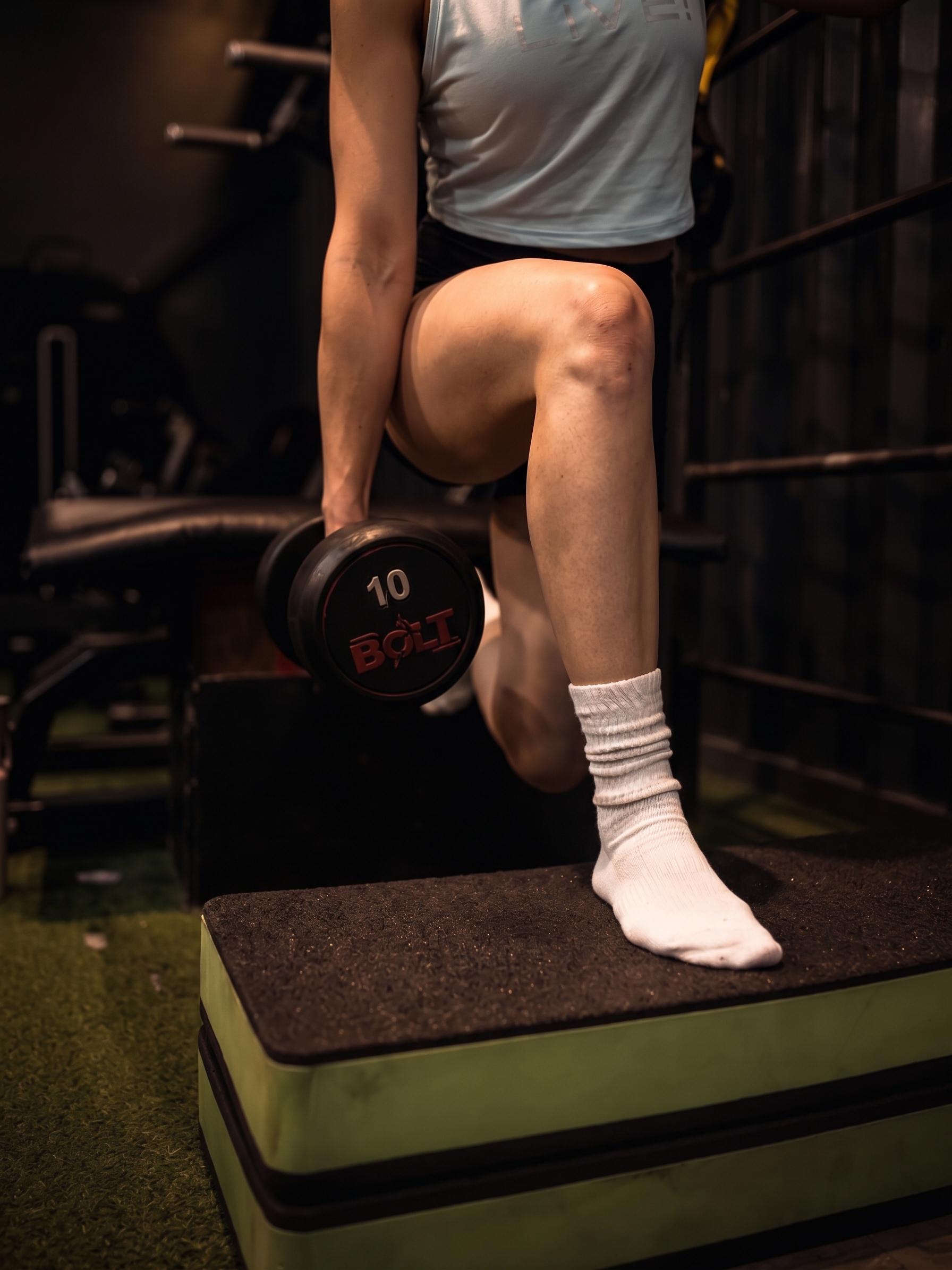
We tested the Adidas Adizero Dropset Pro — and what it reveals goes well beyond the shoe itself. Here’s a number that says more about where wellness is heading than any trend on Instagram: the U.S. wellness economy has crossed $2.1 trillion — more than a third of everything spent on wellness worldwide. The average American now spends over $6,000 a year on self-care. That’s not indulgence. That’s priority.
And priority, when it meets limited time, demands efficiency. That’s where hybrid training comes from — merging strength and endurance into a single session, without the old-fashioned luxury of separating “run day” from “lift day.” Formats like HYROX have gone from niche to common language among people who treat their bodies as a long-term investment.
The problem is that footwear never quite caught up. In a recent global survey, nearly half of hybrid athletes said their current shoe limits their performance — and most are still waiting for a single pair that can hold up to both the speed and the stability each phase of the workout demands.
If you’ve felt that friction — swapping shoes mid-session, losing your rhythm — it’s worth getting to know the model built to fix exactly that.
Why Hybrid Training Won the Debate
For years, exercise science treated strength and endurance as opposing choices — as if building power in the weight room meant sacrificing your wind on the run, and vice versa. Practice (and a growing body of research) proved otherwise. An eight-week study led by Herodek et al. found that athletes on a hybrid protocol — combining HIIT-style intensity spikes with a steady aerobic base — saw an 11.8% jump in VO2 max, alongside measurable drops in systolic blood pressure and body fat. That’s not a marginal result: it’s the kind of curve that usually takes months to show up in single-modality training.
The cardiovascular impact is where the numbers get even more interesting. According to a scientific statement from the American Heart Association, combining strength and aerobic training can lower cardiovascular risk by up to 46% — compared to 29% for aerobic training alone and 18% for strength training alone, all measured against a sedentary baseline. The takeaway is simple: the heart responds better to variety than to repetition of a single stimulus.
There’s a less-discussed dimension too — the metabolic one. When the body gets used to a single type of effort, progress slows down; it’s the plateau every long-time trainer has felt. Alternating between strength and endurance stimuli breaks that pattern, keeping metabolism in constant negotiation — which translates, in practice, into more efficient body recomposition than either modality delivers alone.
And then there’s the gain that doesn’t show up on any test: mental resilience. Research on training-stimulus variation links exposure to different physical challenges with greater cognitive flexibility and stress adaptation — as if a body trained to switch between demands teaches the mind to do the same outside the gym.
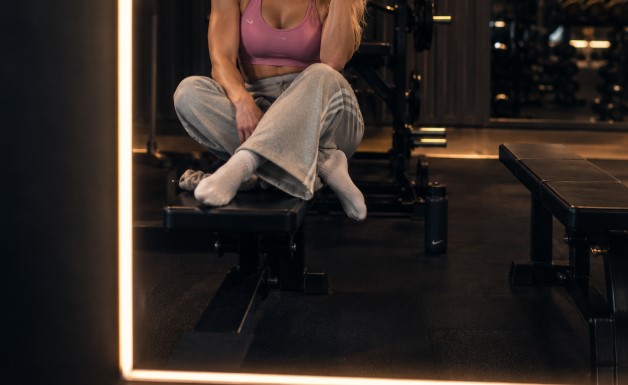
The Adidas Adizero Dropset Pro also comes in a women’s version — same Lightstrike Pro technology, its own color story, covered further below.
Who’s Already Made the Switch — and What It Reveals
People who adopt hybrid training rarely describe the change in aesthetic terms. The language is different: “energy left over at the end of the day,” “presence,” “the ability to do more without feeling like you’re paying for it later.” Athletes who’ve made the transition report better muscle oxygenation and a higher effort threshold — stronger legs feeding into running performance, and running, in turn, feeding back into strength gains. It’s a self-reinforcing cycle, and it extends beyond the gym: carrying groceries, climbing stairs, getting through a twelve-hour day without the body sending a bill at night.
Those who haven’t made the switch, on the other hand, are still operating on a binary the science has already moved past — training for looks or for performance, for strength or for stamina. It’s a divide that makes less and less sense to anyone who understands the body as one integrated system, not a set of separate compartments. In the end, the difference between the two groups isn’t how much they train — it’s how much they ask of each session.
Adidas Adizero Dropset Pro: When Engineering Becomes Aesthetics
Adidas’s answer is beautiful — literally. The Adidas Adizero Dropset Pro is born from the meeting of two brand legacies: the speed of the Adizero line, which backs the shoes behind world marathon records, and the stability of the Dropset platform, built for serious lifting. The result is an object that doesn’t apologize for being technical — Lightstrike Pro foam delivers lightweight energy return, Energyrods carry the heel-to-toe transition with a stability you can feel, and Climacool keeps everything breathable under load.
Unveiled globally in Stockholm and tested by elite athletes before hitting shelves, the model landed with its own launch festival — a sign Adidas is treating hybrid training not as a passing trend, but as a permanent category.
Men’s Adidas Adizero Dropset Pro: Black/White/Black
The men’s colorway available right now is Black/White/Black — the more understated of the line, built to move from the rack to the gym floor without drawing extra attention. Check current price and availability on Amazon here.
Women’s Adidas Adizero Dropset Pro: Solar Turbo/Frozen Purple/Lucid Pink
The women’s version comes in a much bolder story — Solar Turbo/Frozen Purple/Lucid Pink — same Lightstrike Pro cushioning and Energyrod stability, in a palette built to stand out rather than blend in. Check current price and availability on Amazon here.
Adidas Adizero Dropset Pro Specs: The Details Behind the Promise
What separates a genuine hybrid shoe from a plain “gym sneaker” comes down to the midsole — and that’s exactly where the Dropset Pro makes its smartest bet. The dual-density construction gives the heel a firm, almost rigid base, right where a heavy squat needs stability; at the forefoot, that same midsole turns soft, absorbing the impact of jumps and sprints without transferring stiffness through the rest of the movement. That duality — firm where it counts, flexible where it matters — is what lets the same pair carry both a deadlift set and a sprint interval on the treadmill.
A breathable, high-durability upper and a high-traction outsole round out the equation, delivering lateral support for multidirectional movement — the kind of side-to-side load most running shoes were never built to handle.
For the numbers-minded: the model has a 7mm drop, neutral pronation support, traditional lace closure, and is rated for up to 21km per use — enough to cover any hybrid session, from a strength block to a recovery jog, on road or treadmill.
The Real Luxury: Is the Adidas Adizero Dropset Pro Worth It?
Maybe the most interesting number here isn’t in the shoe’s spec sheet, but in what it represents: a generation that has decided optimizing their own time is the highest form of self-care. It’s not about having more hours — nobody does. It’s about refusing waste, including the waste of swapping shoes mid-session. It’s the same logic of regulation and recovery behind the vagus nerve’s role in high performance.
The Adidas Adizero Dropset Pro is, in that sense, less a shoe and more an answer to a question the wellness economy has already been asking for a while: what is your time worth, and what are you willing to optimize to protect it?
If the answer is “quite a lot,” here’s the men’s pair — or the women’s — that solves that equation.
#affiliatedisclosure — This article contains affiliate links. As an Amazon Associate, Élevé Society earns from qualifying purchases. Prices are subject to change; please confirm the current price on the product page.