Wellness Tech Series / Élevé Society — September 2026
Disclosure: As an Amazon Associate, Élevé Society earns from qualifying purchases. This is an independent, honest review — we were not paid by Lumen to write it.
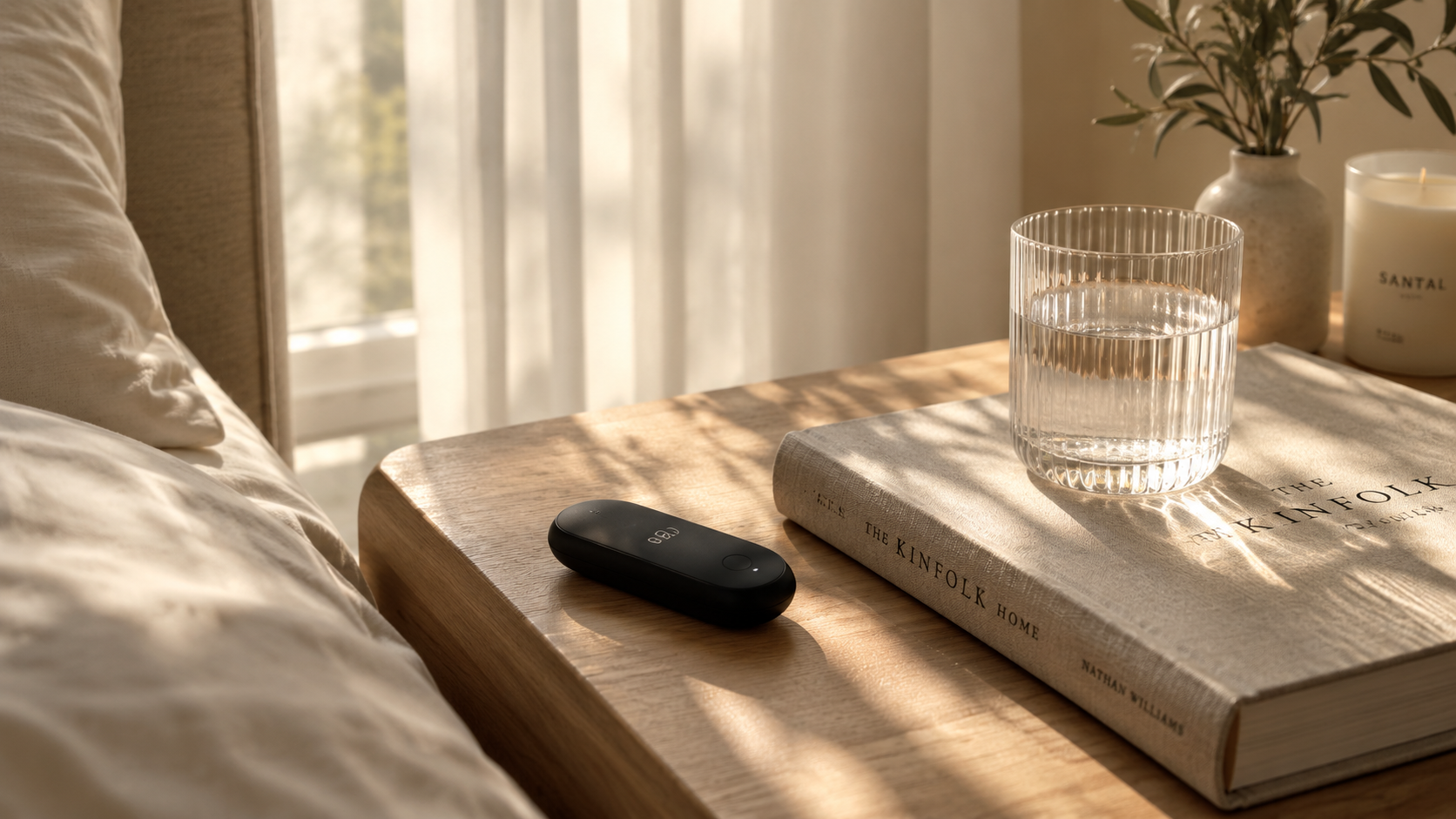
The Revenge of the Human: Why This Lumen Tracker Review Starts Here
This Lumen tracker review opens with a bigger question, because context matters: the Global Wellness Summit’s latest report gave a name to something we’ve felt building for a while. 2026 is the year of “The Revenge of the Human” — a quiet revolt against a wellness culture that turned into performance, screens, and self-surveillance. Luxury, in 2026, is no longer about accumulating data. It’s about reclaiming the peace of mind that technology promised and never quite delivered.
That’s the lens through which we’re opening our Wellness Tech series: three technologies that, in our reading, survive that stricter filter — not because they promise more numbers, but because they demand less of you.
First up is the Lumen tracker. And the reason it earns a place in Élevé’s luxury wellness curation isn’t how much it measures. It’s how little it asks of you afterward.
You breathe. You put the device in a drawer. You go about your day. No smartwatch buzzing on your wrist all afternoon asking for attention. No notification nagging you to “close your rings.” That absence — that discretion — is, paradoxically, what makes the object sophisticated.
The Science Behind the Breath: How the Lumen Tracker Works
Explaining biology without sounding like a textbook is a precision exercise. So, straight to the point: every body has a natural fuel preference at any given moment — sometimes pulling more from fat, sometimes more from carbohydrate. That alternation is called, in physiology, metabolic flexibility. It’s what quietly determines how you process a meal, how you recover from a workout, how you get through a longer fast.
Lumen reads that preference through the CO₂ in a single breath and translates it, in the app, into a number that’s easy to interpret. It’s not a verdict. It’s a window — discreet, momentary — into your bio-individuality, replacing the guesswork about how your body specifically is responding to your day, your last meal, your stress levels.
How the Lumen tracker compares to other breath-based devices. Lumen currently has no true direct competitor in the consumer indirect calorimetry category. Devices like Keyto and Biosense measure acetone to detect ketosis — useful if you’re strictly keto, but they don’t capture the full carb-to-fat fuel ratio or offer daily nutrition guidance beyond a ketosis status. If ketosis verification is your only goal, a dedicated keto breath meter may be a better, cheaper fit. If you want the broader picture — and a system that actually coaches you on what to do with the data — Lumen is in a category of its own.
On the science itself: an independent 2025 study benchmarked Lumen’s breath-based measurements against standard indirect calorimetry equipment, lending real scientific validation to its core measurement claim, developed in collaboration with San Francisco State University. It’s not just marketing language — the underlying concept has peer-reviewed backing.
Less Metrics, More Rhythm
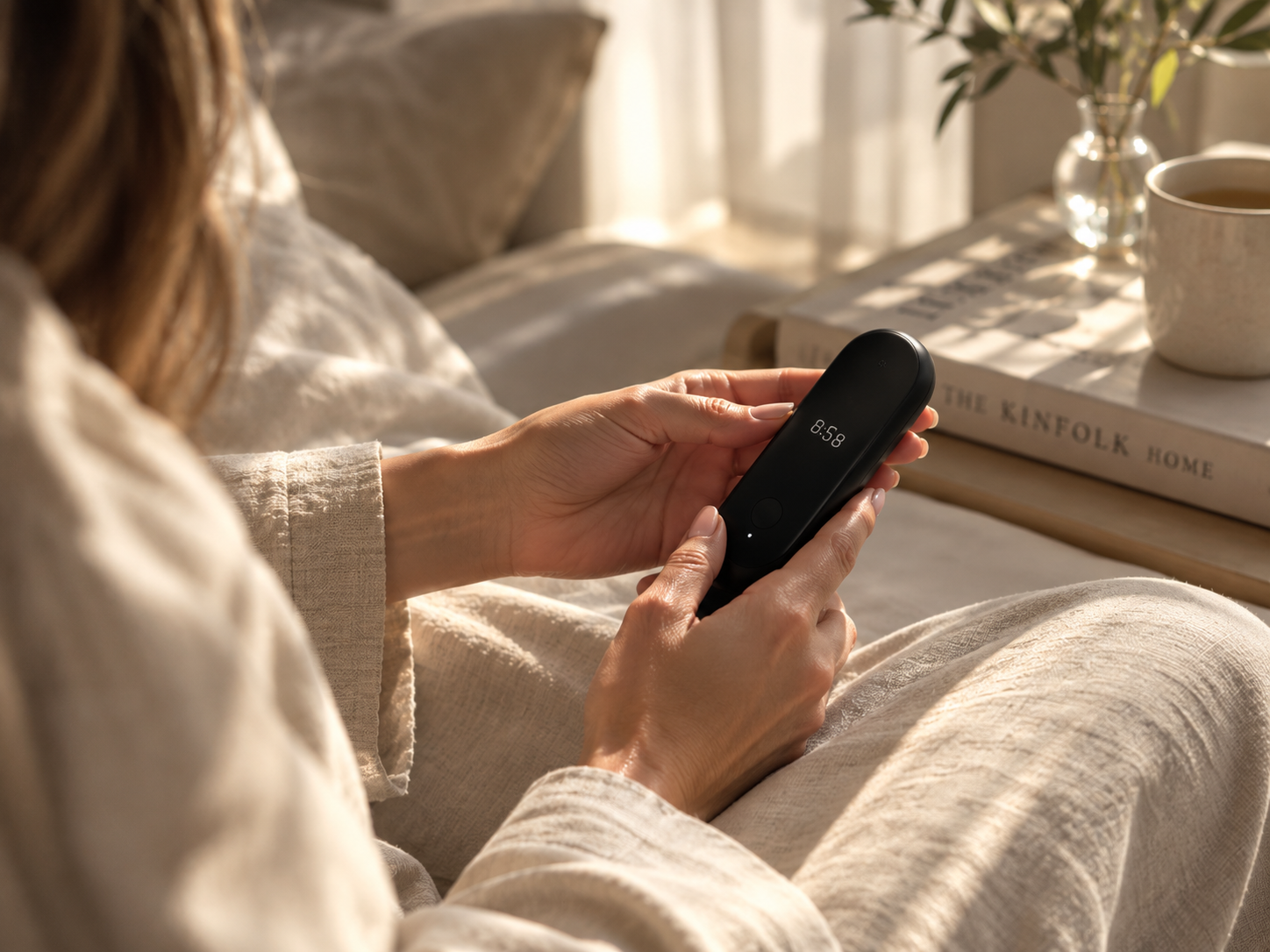
Here’s the point most reviews skip, because most reviews treat Lumen as one more tracker to “optimize.” We disagree with that reading.
The suggested ritual is deliberately minimal: one measurement upon waking. Occasionally, a reading before a meal and another 60–120 minutes after, to observe how your body responded. This isn’t continuous surveillance — it’s a checkpoint. One data point a day, maybe two or three on days you’re specifically curious.
The most common misreading of a Lumen tracker is treating it as a daily performance grade — one more number to feel bad about if it’s “wrong.” The idea here is the opposite: Lumen doesn’t ask for screen discipline. It asks for one breath, then silence. It’s the antithesis of a smartwatch that insists on staying in your field of view all day.
That’s the difference between tracking and regulation. Tracking is the raw data — the mirror. Regulation is what you do after looking in the mirror, without becoming hostage to it. Biological autonomy isn’t about having more data. It’s about knowing exactly which data matters, and letting the rest go.
The Blind Spot: What No One Tells You
Real curation doesn’t hide the rough edges. Two points that rarely show up in conventional reviews — and, in our view, are exactly what separates a surface-level take from an honest one:
The breathing learning curve. Lumen requires a specific breathing technique: inhale deeply, hold for a few seconds, then exhale slowly and steadily into the mouthpiece. It’s not intuitive on the first try — the app rejects readings taken too quickly or unevenly, and it’s common to miss a few times before getting the hang of it. Most reviews mention this only in passing, if at all. We’re telling you upfront: budget a week of learning curve before expecting consistent readings.
The real product is the subscription. The hardware is only half the equation. AI-driven insights, personalized meal plans, and deeper in-app coaching depend on a recurring paid membership. This isn’t a hidden flaw — it’s actually a signal of where the real value sits: not in the piece of metal and plastic that fits in your palm, but in the software ecosystem around it. Anyone buying Lumen expecting the hardware alone to deliver the full experience will be disappointed. Anyone who understands they’re buying access to a system — not an object — walks away satisfied.
That distinction, to us, is the real test of sophistication: are you buying the object, or are you buying what the object unlocks?
Pricing, Honestly
Because transparency matters more to this audience than it does elsewhere: the Lumen device starts around $359 for the hardware alone, though promotional bundles (device plus an annual membership) have brought that down to roughly $179 in some campaigns. The recurring membership, when not bundled, runs about $19/month and unlocks the AI-driven nutrition plans and deeper coaching layer. Budget for the ecosystem, not just the object — as outlined above, that’s where the real utility lives.
Curation Sheet: Lumen Tracker Design and Specs
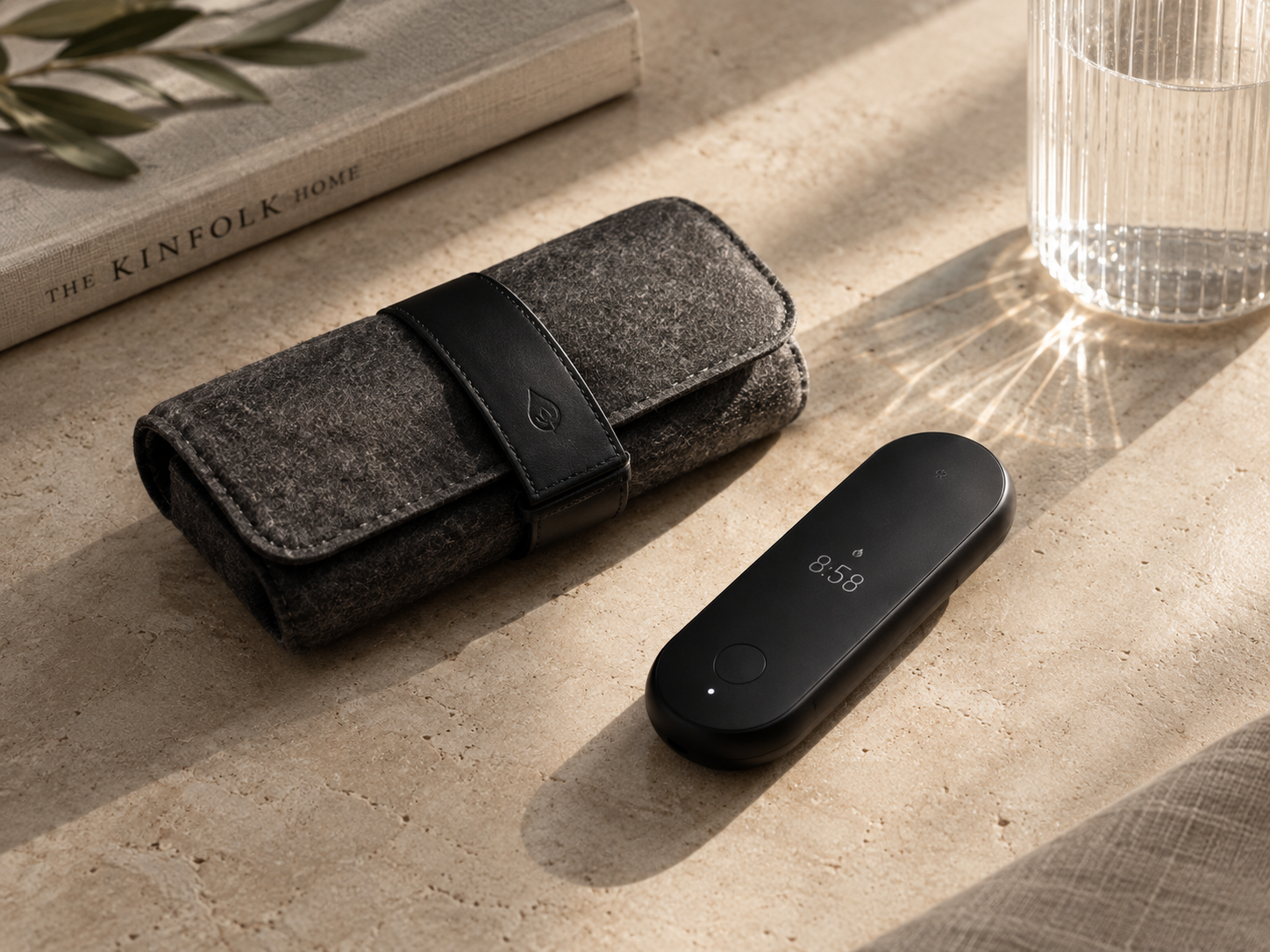
Design and usability first — the numbers that actually shape the daily experience:
- Design: minimalist, premium finish — discreet enough to live in a bag or a nightstand drawer, not something you display like a trophy.
- Battery life: roughly 10 days on a single daily measurement, so it never joins your nightly rotation of chargers.
- Portability: comes with a premium felt travel case, built for people who won’t skip the ritual on the road.
- Ecosystem: daily nutrition guidance via the app, with a deeper AI-driven layer behind the membership.
Editorial note: Lumen is not a medical device and doesn’t replace professional guidance — especially for anyone under 16 or with specific clinical conditions. Treat it for what it is: a tool for self-knowledge, not a diagnosis.
Full Specifications
For readers who want the cold data before deciding — and for anyone landing here from a technical search:
| Specification | Details |
|---|---|
| What Lumen measures | CO₂ levels to identify fat vs. carbohydrate burn |
| Technology & sensors | Flow and pressure sensors for single-breath analysis |
| Connectivity | Bluetooth, paired with the Lumen app (iOS and Android) |
| Health integrations | Syncs with Apple Health, Google Fit, and Garmin (via Connect IQ) |
| Battery & runtime | Lithium-ion (500 mAh) — about 10 days on one daily measurement |
| Design & portability | Premium minimalist finish, includes travel case |
| Business model | Hardware + recurring subscription for AI insights and meal plans |
| Contraindications | Not recommended for under-16s or severe clinical conditions without medical clearance |
The Intentionality Filter: Who the Lumen Tracker Is For
Not every wellness object serves every kind of person — and pretending otherwise is exactly why most reviews sound generic.
Lumen isn’t for someone already drowning in health data — between a smartwatch, a sleep app, and a macro spreadsheet — whose real need right now is less screen time, not more. For that person, another device is noise, not clarity. That’s precisely the audience the “Revenge of the Human” movement is reclaiming.
It makes sense for someone looking for one precise, occasional data point to calibrate small, reasonable decisions through the week — without turning it into a daily obsession. For someone who understands that metabolic sophistication isn’t about accumulating metrics, but about having surgical clarity on what’s actually worth watching.
It’s a filter of intentionality, not performance. And that filter — more than any spec sheet — decides whether Lumen belongs in your routine.
Next in the series: HigherDOSE — infrared heat as ritual, not performance.
CTA: View on Amazon →